
Lille: France’s Most Overlooked Wine City
When people think of France’s great wine cities, Beaune, Bordeaux and perhaps Paris are usually the first names that come to mind. Lille, by contrast, rarely features on a wine lover’s itinerary. It deserves far more attention. The capital of northern France has a vibrant wine culture, exceptional cavistes and restaurants with wine lists capable of surprising even the most seasoned enthusiasts.
I discovered Lille almost by accident. A business appointment first took me to Brussels, and with the French border only a short train ride away, extending the trip by a few days seemed an obvious choice. The TGV covers the roughly 120 kilometres between Brussels and Lille in just 34 minutes, often for less than €20, including a reserved seat.
The walk from Lille Europe station into the old town is an introduction to Lille in itself. Within minutes, modern buildings give way to narrow streets lined with historic façades, intimate squares and lively cafés. Lille feels unmistakably French, yet refreshingly relaxed and entirely unpretentious.
As I made my way towards the city centre, one question kept returning:
Could a city whose culinary tradition is shaped more by beer than by wine really have something to offer a wine lover?
Only a few hours later, I had my answer.
Absolutely.
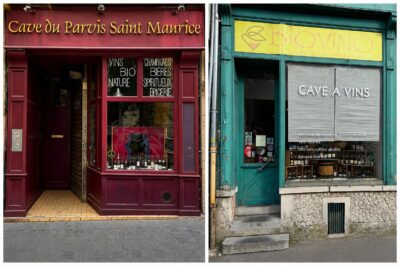 During a stroll through the old town, I was struck by the sheer number of small cavistes scattered across the city. Many look rather unassuming from the outside. Faded bottle labels and a light layer of dust in the shop windows gave some displays a slightly timeworn appearance. Nothing hinted at the treasures hidden behind those doors. I hesitated before stepping into the first shop.
Fortunately, curiosity almost always gets the better of me.
And this time, it certainly did.
Behind those modest façades lies an astonishing selection of artisan wines from growers who place origin and a deep respect for nature at the heart of their work. Even the smallest cavistes offer thoughtfully curated selections that reward careful browsing.
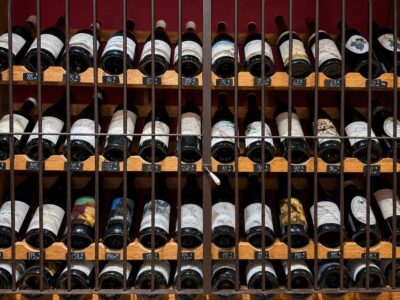 That is how I came across a bottle of 2020 Château de Bonnezeaux La Montagne at Les Vins d’Aurélien for just €32. It was a wine I had wanted to taste for quite some time, and one that would accompany me on a picnic beside the Canal de la Moyenne-Deûle later that day.
Yet it wasn’t only the wines that made these visits memorable. Just as lasting were the conversations in the wine shops themselves. Everywhere I was welcomed warmly, offered knowledgeable advice and never once pressured into buying anything. Nor should anyone worry about the language barrier: in almost every caviste I visited, English was spoken with ease.
Behind an Unassuming Façade
My most memorable experience, however, came at Cave du Parvis Saint-Maurice. The shop had never been on my list. I stumbled across it while wandering through the old town. From the outside, it perfectly matched the impression I had already formed of many of Lille’s cavistes: a slightly faded display, weathered bottle labels and nothing to suggest the treasures waiting behind the door.
By then, though, I had already learnt an important lesson: appearances can be deceptive.
And this shop proved exactly why.
Around 2,000 different wines line its shelves, including bottles that are rarely encountered even in highly specialised wine merchants. Yet what impressed me most was not the range itself, but a conversation with the owner, Juliane Chilès. It quickly became clear that wine is not simply sold here; it is part of the way they live.
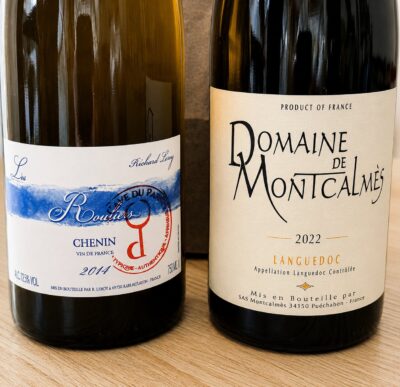 After we had talked for a while, Juliane disappeared into the cellar to fetch a bottle of 2022 Domaine de Montcalmès Languedoc Blanc. When she returned, she was carrying a second bottle as well: 2014 Richard Leroy Les Rouliers.
Earlier in our conversation we had been talking about Richard Leroy, and I had mentioned almost in passing that tasting one of his wines had long been a dream of mine.
At that moment, I became slightly nervous.
I knew what Richard Leroy wines fetch on the secondary market, and they were well beyond what I was prepared to spend.
Then Juliane simply said,
“Eighty-five euros.”
For a brief moment, I honestly couldn’t believe it.
I thanked her once again, said goodbye and stepped back out into the street. Outside the Église Saint-Maurice, I sat down on a bench and stayed there for a few minutes, trying to take in what had just happened.
Not because of the bottle itself, but because Juliane had gone down to the cellar and brought it up for me as though it were the most natural thing in the world.
Those are the encounters that make a journey unforgettable.
If you visit Lille, make sure to stop by Cave Chez Lucien, Biovino, where I came across a bottle of 2019 Domaine Michel Lafarge Volnay 1er Cru Clos des Chênes for €113 and Gabbro Caviste. The latter is a small shop with a thoughtfully chosen selection, where you can also enjoy a glass of wine on the premises. During my visit, I even spotted wines from Thomas Batardière on the shelves.
Wine and Food: A Perfect Match
But what would great wine be without equally good food?
Two restaurants in Lille stood out in particular, not only for the quality of their cooking, but also for the seriousness with which they approach wine.
The first is Rouge Barre (50 Rue de la Halle), where chef Steven Ramon creates a modern cuisine driven by exceptional ingredients. The five-course dinner menu costs just €60 and offers value for money that I have rarely encountered at this level.
The progression of the menu is beautifully judged. Each course naturally leads to the next, sometimes built around contrast, sometimes around harmony. A delicately composed monkfish with courgettes and chanterelles gives way to a more robust veal dish with aubergine and broccoli, before the desserts bring the evening to a close in two very different ways: one fresh and nutty, with apricot, hazelnut and coriander; the other unexpectedly savoury, combining chocolate, olive and basil. The result is a menu that remains engaging until the very last course.
The service was every bit as impressive. Warm, attentive and genuinely welcoming, without ever feeling overly formal or rehearsed. From the moment I arrived, I felt completely at ease.
To accompany the menu, I initially chose a bottle of 2020 Domaine des Tours Grenache Blanc Vaucluse (€52). The wine had evolved far beyond what I had expected. Oxidative notes now overshadowed everything else, leaving little room for the wine to express its original character. The bottle was replaced immediately and without the slightest hesitation. Exactly how one hopes such situations will be handled.
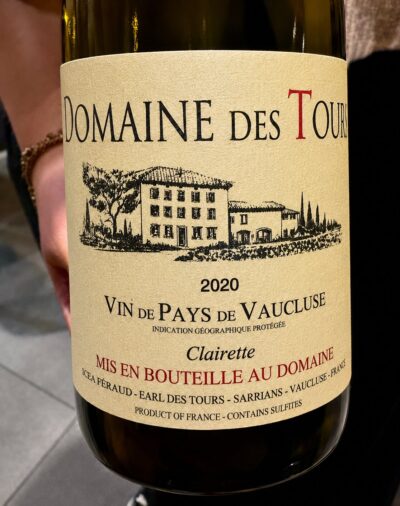 The recommendation that followed was 2020 Domaine des Tours Clairette Vaucluse (€62), and it proved to be exactly the right choice. Apart from the desserts, the wine accompanied every course effortlessly, revealing new facets as the meal unfolded. Saline, herbal and remarkably expressive, it combined impressive depth with an elegant mouthfeel and a fine phenolic grip. Like the menu itself, it seemed to grow in character from course to course.
The wine list deserves special mention. Although it is not available online, it holds more than a few surprises. Alongside several wines from Château Rayas, there are even bottles from Domaine de la Romanée-Conti. Yet its real strength lies elsewhere: in the breadth of thoughtfully selected wines across a wide range of prices. The list alone is reason enough to visit.
Sadly, Victor, Rouge Barre’s sommelier, who enjoys an outstanding reputation among French wine professionals, had injured his foot during the Fête de la Musique and was away during my visit. For me, that is reason enough to return – although, truth be told, I hardly needed another excuse. The combination of food, wine and service was simply too complete. Rouge Barre offers cooking that I would comfortably place within reach of a Michelin star, yet without the prices so often associated with that level of dining.
One final detail deserves mentioning. Families are genuinely welcome here. Instead of the predictable children’s menu, Rouge Barre offers a carefully considered version of its own menu for younger guests. A small touch that says a great deal about the restaurant’s philosophy.
Regional at Heart
If you would like to discover the cuisine of northern France, I can wholeheartedly recommend Bloempot, on Rue des Bouchers. Every ingredient served here comes from within a radius of no more than 150 kilometres. Regional sourcing is not a fashionable slogan, but a genuine philosophy.
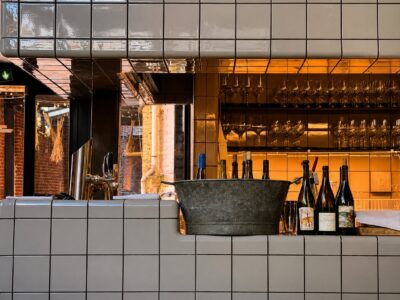 As at Rouge Barre, the focus is firmly on the quality of the ingredients and allowing them to speak for themselves. The open kitchen offers a clear view of the team at work, cooking with quiet confidence and impressive craftsmanship. Simply watching them is part of the experience.
The lunchtime menu consists of three courses, accompanied by two small amuse-bouches, and costs just €38. For an additional €18, you can choose a carefully matched wine and beer pairing.
The wines were thoughtfully selected and reflected the regional, artisan spirit of the cuisine. Two, in particular, have stayed with me: Pampa Chardonnay 2023 from Clos Sauvage in Mâcon-Chaintré, and Primula 2024 from Domaine de l’Iserand.
They are wines I would probably never have discovered without this meal.
Those are exactly the kind of discoveries that make a thoughtfully chosen wine pairing so rewarding.
Enjoying Lille: Wine Bars, Picnics and Small Discoveries
Lille is not a city to be discovered only through its wine merchants and restaurants. More often than not, it is the simple moments that stay with you: a glass of wine in a small bar, a fresh baguette tucked under your arm, or a picnic beside the canal.
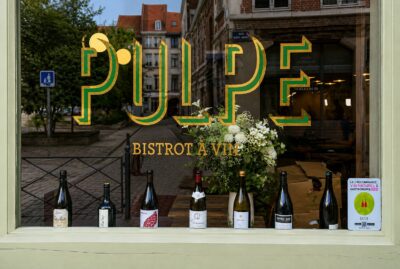 If you are looking for somewhere to end the day with a good glass of wine, take a stroll along Rue Saint-André. Several excellent wine bars are clustered here, but my personal favourite is Pulpe. It combines a relaxed atmosphere with a thoughtfully curated wine list and a menu of beautifully prepared small plates. During my visit, I spotted wines from Domaine Jamet, Thierry Allemand and La Rogerie on the list, to name just a few.
One piece of advice: book well in advance. By evening, every seat is usually taken.
I look back just as fondly on our picnic beside the Canal de la Moyenne-Deûle. With a glass of Chenin Blanc, some good cheese, fresh fruit and water lilies stretching across the canal, it is easy to feel as though you have stepped into a painting by Claude Monet. You won’t even need a picnic blanket. There are plenty of benches along the canal where you can happily while away an afternoon.
The best place to gather provisions is the market in Wazemmes. I was particularly taken with the covered market. While the outdoor stalls during my July visit were largely selling wholesale produce, inside I found everything I could have wished for: beautifully ripe fruit and vegetables, olives, cheeses and a wealth of regional specialities.
If you prefer buying your cheese in the old town, Philippe Olivier is well worth a visit. I chose a Vieux Gris de Lille, one of the region’s traditional cheeses. To be honest, though, I slightly preferred the selection at the market. But that is one of the pleasures of travelling: everyone discovers their own favourite places.
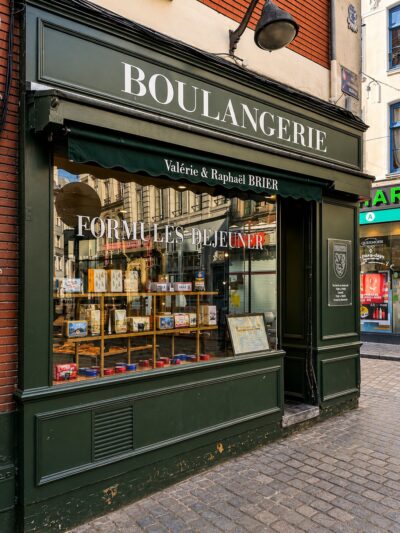 I nearly forgot the most important thing of all: the baguette. For that, make your way to Boulangerie Valérie & Raphaël Brier. It was, without question, my favourite bakery in Lille’s old town. And while you’re there, don’t leave without a tarte au citron meringuée. You’ll understand why from the very first bite.
More Than a Wine City
Lille has far more to offer than its wine culture. Its beautifully restored old town, independent shops, welcoming cafés and relaxed atmosphere make it a city that invites you to return. Perhaps because it still sits just outside the well-trodden tourist trail, it leaves plenty of room for your own discoveries.
Maybe that is Lille’s greatest strength. You arrive for a business appointment, a long weekend or simply out of curiosity, and leave with far more than you expected. Not just a few good bottles, but memories of people and places that stay with you long after you’ve returned home.
The people I met in Lille’s cavistes, restaurants and wine bars all seemed to share the same conviction. Wine is neither a status symbol nor a trophy. It is something to be opened, shared and enjoyed together.
That openness and generosity left a far deeper impression on me than any famous bottle ever could.
Perhaps your own visit will lead you to a different caviste, another favourite spot beside the canal or a bottle you never imagined you would find there.
That, to me, is the real charm of Lille.